

Ask most medi-spa owners what happens during a laser hair removal treatment and they’ll describe the process accurately. The laser targets the melanin in the hair follicle, generates heat, destroys the follicle, and the hair growth cycle is interrupted. It’s a clean and controlled procedure. One crucial aspect that gets overlooked is the smoke.
That thin wisp rising from the treatment area is more than just burnt hair. It’s a laser plume, and its contents are complex and dangerous. Understanding what’s inside the plume, and what it takes to properly remove it from the breathing zone, is one of the most important tasks a medi-spa owner or manager can take on.
What’s Inside a Laser Hair Removal Smoke Plume, and Is It Dangerous?
When a laser or intense pulsed light device fires at the skin, the energy is absorbed rapidly and converted to heat. Tissue and hair follicle cells reach certain temperatures where they vaporize. This vaporization produces the plume.
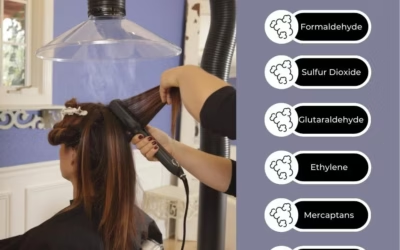
Research into surgical and aesthetic laser plumes has identified a consistent and concerning mix of contents. The gaseous component includes carbon monoxide, carbon dioxide, and a range of volatile organic compounds (VOCs) produced by the thermal breakdown of biological tissue. Benzene, toluene, formaldehyde, and other compounds with known health implications have been identified in laser plume samples across multiple studies. These are the same chemical categories that raise flags in other occupational exposure contexts. Here, they are present in concentrated form, generated directly in front of the technician performing the laser hair removal treatment.
Vaporized tissue condenses into ultrafine particles that remain suspended in the air. These particles are frequently in the submicron range, well below the threshold that the body’s upper airway defenses can filter effectively. They travel deep into the lungs upon inhalation and cause serious damage with repeat exposure.
Laser Plume Health Risks from Bioaerosols
Laser hair removal smoke plumes contain biological material from the client’s skin and follicles. Studies examining laser and electrosurgical plumes have detected intact and fragmented cellular debris, blood components, and in some treatment contexts, viable or fragmented microbial DNA. The question of whether laser-generated bioaerosols (microscopic airborne particles derived from living organisms) can transmit infection has been the subject of ongoing research, particularly in surgical smoke literature, and the answer is not reassuring. Bacterial and viral DNA, including from human papillomavirus (HPV), has been identified in plumes generated during laser procedures on affected tissue. The infectivity of those fragments remains an area of active investigation, but the presence of biological material in respirable particle form is itself a hazard category that medi-spas need to take seriously.
For a laser technician performing treatments for six to eight hours a day, the cumulative inhalation exposure to these bioaerosols is substantial. Medi-spa managers must put measures in place to control the risk.
Why Surgical Masks and Open-Room Ventilation Lack Adequate Surgical Smoke Evacuation
The same thinking that applies to protecting your team against gaseous formaldehyde in keratin treatments applies here. Standard face masks are not designed to filter submicron particles or VOCs. A surgical mask offers minimal protection against the finest particulate matter in a laser plume, and offers no meaningful protection against the gaseous chemical components at all.
General HVAC and open-room ventilation face the same fundamental limitation they face in every high-exposure beauty industry context. By the time diluted room air cycles through the system and gets replaced with fresh air, the technician positioned directly above the treatment site has already inhaled the most concentrated portion of the plume many times over. Dilution after dispersal is far inferior to capture before exposure.
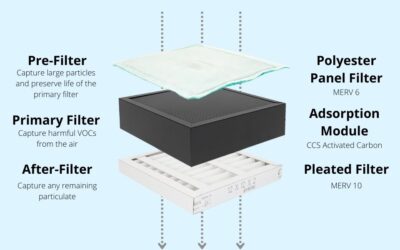
Surgical smoke evacuation addresses this at the point of generation through source capture. A properly designed medi-spa source capture system draws the plume away from the treatment before it can be inhaled and passes the plume through a multi-stage filtration system that includes HEPA filtration for particles and activated carbon for VOCs and odors. This process keeps the technician’s breathing zone clear throughout the treatment.
What to Look for in a Smoke Evacuation System for Your Medi-Spa
Not all evacuation systems are created equal. For laser and aesthetic procedures common in medi-spa applications, the relevant performance criteria include airflow capacity sufficient to capture the plume at the point of generation, true HEPA filtration rated at 99.97% efficiency at 0.3 microns, and an activated carbon stage capable of adsorbing VOCs and chemical odors. The capture inlet needs to be positioned close enough to the treatment site to intercept the plume before it disperses; this is typically within a few inches of the laser handpiece.
At Salon Pure Air, we offer a wide range of source capture units designed for use in medi-spa environments. They meet the filtration criteria, adhere to clinical cleanliness standards, and run quietly as not to interfere with the treatment experience.
Is Laser Hair Removal Smoke Dangerous? Not with the Proper Protection
Laser technicians and estheticians are certified professionals. The investment in their expertise, their client relationships, and their technique adds value to your business. Chronic respiratory irritation, headache patterns, and long-term health concerns that trace back to inadequate plume protection are entirely preventable outcomes. Providing the right prevention is as straightforward as installing the right equipment.
Help your team breathe safely and perform at their best. Explore our full range of source capture solutions for medi-spas, or contact us today to learn more about Salon Pure Air products.