


Medi-Spas
Clean Air. Clinical Confidence.
Medi-spas operate at the intersection of health care and esthetics, where maintaining a controlled, contaminant-free environment is essential for both client safety and regulatory compliance. Procedures such as laser treatments, chemical peels, micro-needling, and injectables can release a variety of airborne pollutants — including volatile organic compounds (VOCs), formaldehyde, isopropyl alcohol vapors, aerosolized disinfectants, fine particulate matter (PM2.5 and smaller), and bioaerosols containing bacteria or viral particles. To mitigate these pollutants, proper air purification for estheticians and clients is necessary in any medi-spa.
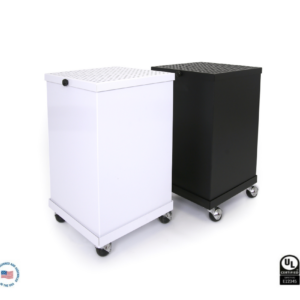
The Salon Pure Air® high-efficiency air purifier for spas utilizes medical-grade HEPA filtration, activated carbon adsorption, and advanced chemical filtration to continuously capture and neutralize fine particles, odors, and gaseous pollutants at the source. Our spa air purifier system creates a cleaner, safer environment that supports infection control, staff well-being, and optimal patient outcomes.




Medi-Spa FAQs
What types of air contaminants are generated during medi-spa treatments?
Medi-spa air quality is compromised by a wide mix of contaminants generated across different service types. Common air contaminants in medi-spas include VOCs (volatile organic compounds) from chemical peels, disinfectant sprays, and topical solutions, alongside fine particulate matter, laser plume, and bioaerosols from skin-contact procedures. Because medi-spas offer a broader range of treatments than a typical salon, the contaminant profile changes from room to room. This makes comprehensive, layered air filtration essential throughout the facility.
How do laser treatments impact indoor air quality in medi-spas?
Laser treatment air quality is one of the most significant concerns in a medi-spa setting. When laser energy is applied to skin, it vaporizes tissue and generates a laser plume, which is a smoke byproduct that contains fine laser smoke particles, VOCs, cellular debris, and potentially viable biological material. This plume is produced quickly and in concentrated amounts directly at the treatment site, making source capture the most effective way to protect practitioners and clients from inhaling it before it disperses into the room.
What airborne particles are created during microneedling procedures?
Microneedling generates airborne particles that are easy to overlook but essential for air quality management. As needles repeatedly puncture the skin surface, fine skin debris and biological aerosols, such as cellular material and moisture droplets, become airborne in the immediate treatment zone. These microneedling airborne particles can carry bacteria or other biological matter, making local filtration at the treatment station an important part of maintaining a sanitary procedure environment in addition to standard surface hygiene protocols.
Why is particulate matter (PM2.5) a concern in medi-spas?
PM2.5 in a medi-spa is a concern because particles at that size range (2.5 microns and smaller) are fine enough to bypass the body’s natural respiratory defenses and reach the lungs directly. Fine particles from aesthetic treatments, including laser plume, skin debris, and powder-based products, frequently fall into this size range. In a treatment room environment, airborne dust and spa-generated particulate can accumulate quickly without adequate filtration, leading to chronic low-level exposure for staff who spend full days in the space.
How do airborne bacteria and viruses spread in medi-spa environments?
Airborne bacteria in spa settings and virus transmission in treatment rooms are serious risks, particularly in spaces where procedures involve broken skin, respiratory proximity, or aerosol-generating equipment. Bioaerosols from skin treatments and patient breathing can linger in the air of small, enclosed rooms. Strong infection control through air quality requires HEPA-rated filtration capable of capturing particles at the size range where bacteria and viral carriers travel.
What role does ventilation play in medi-spa air quality?
Standard HVAC systems alone can’t meet medi spa ventilation requirements. They redistribute contaminants rather than eliminating them, allowing VOCs, fine particulates, and bioaerosols from treatments to linger or migrate between spaces. Truly clean airflow in an aesthetic clinic requires pairing general ventilation with source capture filtration to continuously neutralize pollutants at the source. Salon Pure Air® source capture units use medical-grade HEPA and activated carbon filtration to remove harmful fumes and protect both clients and staff.
Why is source capture important for medi-spa air filtration?
Source capture air filtration for spas mitigate harmful particulate by placing a filtration intake directly at that point of origin, pulling contaminants in before they have a chance to rise and spread into the room. Without source capture, fume extraction in a medi-spa is reactive rather than preventive; ambient purifiers can only clean air that has already traveled through the breathing zones of both the practitioner and the client. Local exhaust ventilation at each spa station ensures the highest concentration of harmful particles and VOCs is intercepted immediately, making source capture the most critical layer of any medi-spa air quality strategy.
How does poor air quality affect medi-spa staff and clients?
The health effects of VOC exposure in a spa setting range from immediate irritation (eye watering, headaches, throat discomfort) to longer-term respiratory concerns with chronic daily exposure. Medi-spa worker safety is particularly at stake, since practitioners spend entire shifts in treatment rooms with repeated chemical and particulate exposure. In facilities with inadequate filtration, sick building syndrome patterns can emerge over time, with staff reporting persistent fatigue and respiratory symptoms. Clients with asthma or chemical sensitivities may also react to spa chemical exposure, affecting their comfort and likelihood of returning.
What air quality standards or regulations apply to medi-spas?
Medi-spa air quality regulations draw from multiple sources depending on how the facility is licensed. OSHA ventilation guidelines apply to worker chemical exposure, while state health boards that license medi-spas as medical or esthetician facilities may impose additional indoor air quality compliance requirements. Facilities performing laser procedures often fall under specific medical spa aesthetic health standards that address plume management directly. Because the regulatory landscape varies by state and service type, consulting with an air quality specialist familiar with the medi-spa industry is the most reliable path to full compliance.
What is the difference between air purification and source capture in medi-spas?
When comparing an air purifier vs source capture in a spa, the key distinction is where filtration occurs. Ambient medi-spa air filtration systems clean air that has already circulated throughout the room. This creates an environment where staff and clients experience brief exposure before contaminants are eventually captured. Source capture units intercept contaminants at the point of generation, before they spread. HEPA vs carbon filtration in a spa also matters: HEPA handles particles and bioaerosols, while activated carbon is needed for VOCs and chemical odors. The most effective medi-spa setup uses both approaches together.
Do standard HEPA filters remove VOCs?
Standard HEPA filters are highly effective at capturing fine particles, but they do not remove VOCs. Gaseous compounds pass straight through HEPA media without being captured. VOC removal in a medi-spa requires an activated carbon filter, which works through adsorption to trap chemical molecules within its porous structure. For medi-spas where both particulate matter and chemical vapors are present, a filtration system that combines HEPA and activated carbon layers is necessary to address the full range of airborne contaminants.
Get in Touch
We’re committed to helping you find the perfect solution to meet your air quality needs. Reach out today to speak with one of our air quality specialists.