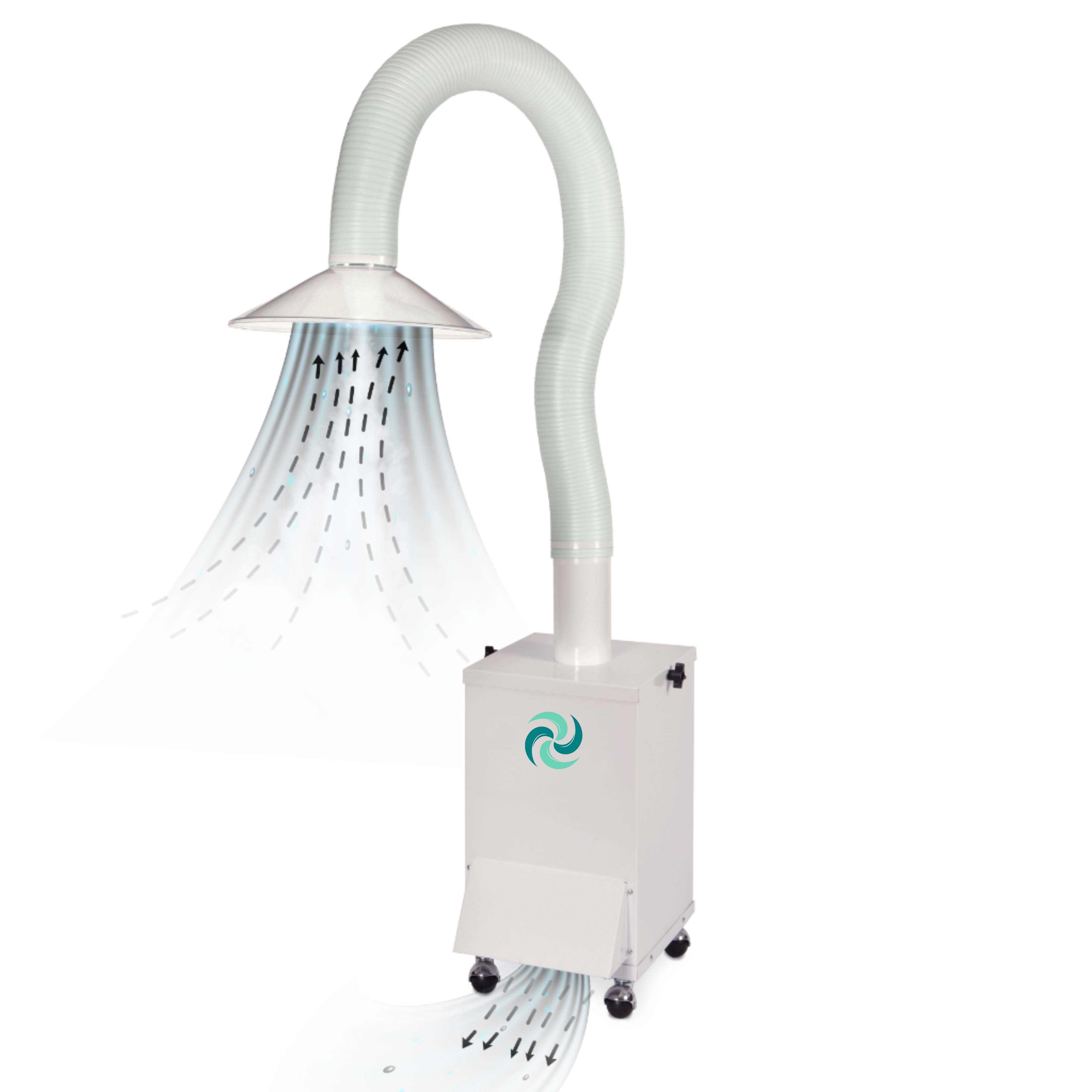


When it comes to improving indoor air quality in salons, spas, tattoo studios, and similar professional environments, airflow often gets the spotlight. But filtration is just as critical—especially in source capture systems designed to remove contaminants at the point of origin. Without the right filtration strategy, even strong airflow can fall short.
A high-quality salon filtration system relies on multiple layers of filtration, each designed to capture different types and sizes of airborne pollutants. This is known as multi-stage filtration, and it’s essential for effectively removing dust, odors, chemicals, and biological particles from the air.
Below is a breakdown of the key filtration stages you should look for—and why each one matters.
Stage 1: Prefilters for Larger Particles
The first line of defense in a multi-stage system is the prefilter. Prefilters capture larger, visible particles such as hair clippings, nail dust, lint, and general debris. While these particles may seem harmless, they can quickly clog more advanced filters if not removed early.
By stopping large particles upfront, prefilters:
-
Extend the life of downstream filters
-
Maintain consistent airflow
-
Reduce maintenance costs over time
For high-traffic salons, prefilters are especially important because they handle the bulk of daily particulate load.
Stage 2: Multi-Density Media for Fine Dust
Once larger particles are removed, the air passes through multi-density filters designed to capture finer particulate matter. This includes microscopic dust generated during nail services, filing, sanding, and other cosmetic procedures.
These layered media filters gradually trap smaller particles as air moves through increasingly dense material. This approach improves efficiency without over-restricting airflow—an important balance in any professional ventilation system.
Stage 3: Activated Carbon for Chemical Adsorption
Chemical odors are one of the most common complaints in salons. Products such as acrylic nail systems, gels, solvents, disinfectants, and adhesives release volatile organic compounds (VOCs) that standard particle filters cannot capture.
That’s where activated carbon salon filtration becomes essential. Activated carbon adsorbs chemical vapors and odors at a molecular level, removing smells rather than masking them. This creates a noticeably cleaner environment for both clients and staff and helps maintain a more professional, welcoming space.
Stage 4: HEPA Filtration for Biological Particles
In environments where biological contaminants may be present—such as skin particles, aerosols, or fine organic matter—a HEPA salon ventilation filter adds another layer of protection.
HEPA filters are designed to capture 99.97% of particles as small as 0.3 microns. This makes them highly effective at removing airborne biological particles that can linger in enclosed spaces, contributing to healthier indoor air quality and enhanced peace of mind.
Why Multi-Stage Filtration Matters
No single filter can handle every type of airborne contaminant. A true multi-stage filter system ensures that particles, dust, chemicals, and biological matter are all addressed—without compromising airflow or performance.
When paired with source capture, multi-stage filtration:
-
Removes contaminants immediately at their source
-
Prevents odors and particles from spreading
-
Protects the health of technicians and clients
-
Creates a cleaner, more professional salon environment
Choosing the Right System
When evaluating a salon filtration system, look beyond basic air movement. Ask about filter layers, replacement schedules, and the system’s ability to handle both particulate and chemical pollutants. Investing in proper multi-stage filtration ensures maximum removal efficiency—and long-term indoor air quality you can rely on.
Cleaner air isn’t an add-on. It’s a standard your clients and staff can feel the moment they walk in.