Tattoo sessions release fine particles into the air, and implementing source-capture air purification into your existing barrier and disinfection protocols is an effective method to control them. Surface cleaning takes care of debris that lands on a station, but you can’t reach mist that’s still drifting through the room this way. Air purification adds an extra layer of protection by treating the air as another area in the tattoo studio that must be cleaned regularly.
Is Tattoo Ink Airborne?
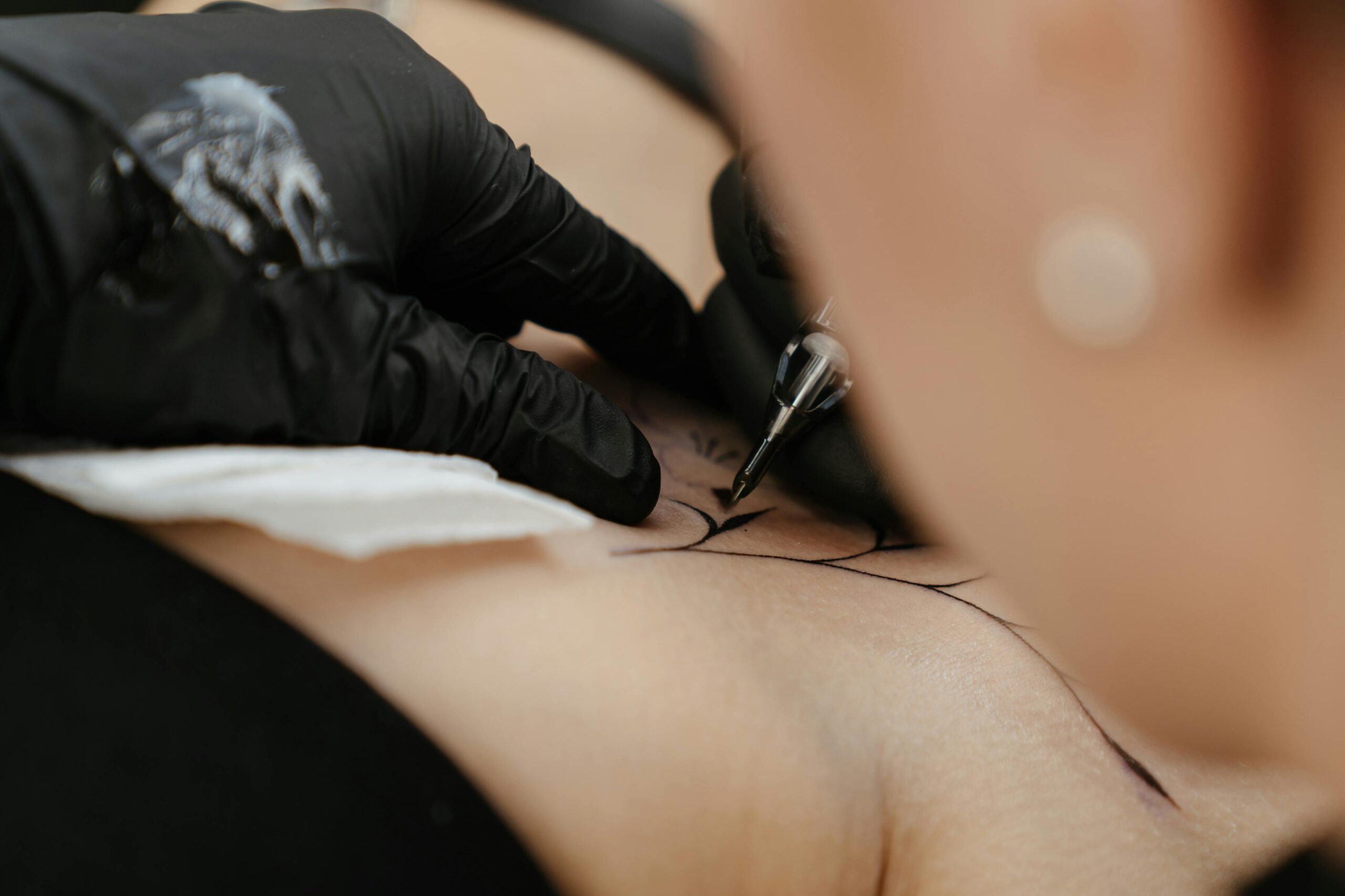
Tattoo ink is not naturally airborne on its own, but it can become airborne during the tattooing process. Each needle puncture releases airborne particles such as fine ink mist and biological aerosols, along with volatile organic compounds (VOCs) from ink carriers and pigment solvents. Published research on needle tattooing itself is limited, but the closest peer-reviewed data comes from laser tattoo removal, where particulate concentrations can reach levels comparable to laser hair removal.
Dentistry also offers a useful parallel: fast rotary instruments mix blood and saliva with water spray, and smaller particles evaporate quickly, shrink and stay suspended longer. The same principle suggests that a fine ink mist can linger after the needle stops.
How Far Can Tattoo Airborne Pathogens Travel?
Evidence specific to tattoo shops is limited, but indoor bioaerosol research is consistent: fine particles of biological origin drift with room airflow, settle onto surfaces, and can be disturbed back into the air. Capturing them in flight disrupts that cycle, which makes pairing the right air purifier for the size and amount of particle emission in your space essential. We offer two ambient filtration options:
- SPA-AMB1 Salon Air Purifier: Includes seven purification stages including a HEPA filter, with enough capacity to completely refresh the air in rooms up to 1,125 sq. ft. in 30 minutes.
- SPA-AMB2 Ambient Salon Air Cleaner: Provides total-room coverage for larger studios, built to filter the air in rooms up to 1,300 sq. ft. with a HEPA filter rated for 99.97% at 0.3 microns.
No matter which air purifier you choose, the goal is the same. Keep fine particles from settling where hands and instruments can come into contact with them. Once particles settle, they stop being an air quality problem and become a cross-contamination hazard.
How to Prevent Cross-Contamination in Tattoo Shops
The best way to protect your shop from cross-contamination is to layer your controls so no single step carries the whole load. The CDC reports that hepatitis B virus stays infectious on surfaces for at least 7 days and can transmit without visible blood. The agency also notes that past outbreaks have been traced to tattoo studios. Transmission in regulation-compliant tattoo settings is rare, but that rarity depends on precautions being taken every time.
Because transmission can happen without visible blood, disinfect the whole workstation between clients, not just what looks soiled. Airborne spray is not easy to spot. It can settle on a tray or a lamp arm, then gets picked up by the next glove – all without any obvious spill. Capturing ink mist before it settles eliminates that possibility entirely.
How to Enhance Ink Mist Safety in Tattoo Studios
Integrating source capture at the tattoo station is a proven method to contain airborne particles like ink mist. Place a fume extractor at the workstation, where it will intercept fumes and particles before they reach the artist’s or client’s breathing zone. Ink mist is most concentrated near where it is created, so make sure to place the capture hood as close to the work as you can without causing any discomfort.
Source capture is critical since masking alone is insufficient. Dental researchers note that particles under 50 micrometers carrying infectious agents can enter the respiratory tract through mask leaks.
A strong filtration setup pairs two approaches:
- Source capture at the station to pull harmful mist and fumes into the extractor before they spread. At Salon Pure Air, we offer a comprehensive range of source capture units to ensure you can find the right setup for your space. For tattoo studios, our SPA-REV Salon Air Cleaner with HEPA is the ideal solution, utilizing multi-stage filtration to effectively trap ink mist, biological contaminants, and strong odors right at the source.
- Ambient air purification to clean the dust and fumes that bypass source capture and cover areas outside of workstations, where filtration is necessary at a broader, less pinpointed level.
How to Improve Tattoo Studio Air Quality, Step by Step
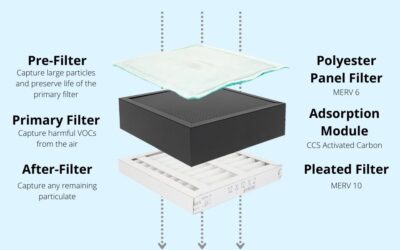
To implement a successful air quality strategy, layer air purification on top of the protocols you already follow, and combine HEPA with activated carbon so the system handles both particles and vapors. Use this routine to put our advice into practice:
- Position the fume extractor arm and hood close to the station, so it captures mist as the artist works.
- Run an ambient purifier through the whole session and the cleanup period afterward.
- Replace filters on schedule. A loaded filter can’t protect anyone.
- Keep disinfecting surfaces. Remember that air purification adds to your protocols rather than replacing them.
If you’re ready to step up the air quality at your tattoo studio but don’t know where to start, we’re here to help. Contact a Salon Pure Air filtration specialist today for personalized guidance.