

If you run a nail studio, you’ve probably noticed that “ventilation” has moved from an afterthought to an inspection item. Whether you’re opening a new space, renovating, or leasing a suite, the rules for removing fumes and dust at the point of service are now part of the conversation with landlords, inspectors, and your own technicians. Here is how the codes work, what they ask for, and how to plan so you don’t pay twice.
Where the Rules Come From
Most nail salon ventilation requirements trace back to the International Mechanical Code (IMC), a model code that many states and cities adopt. The IMC applies only to new construction and to certain alterations and renovations, and it is revised every three years, with the nail salon provisions evolving over the last few cycles. Beginning with the 2015 edition, the code spells out specific exhaust standards for nail salons on top of the general ventilation rates. elieli
The catch is that the IMC is a starting point, not a universal law. States and localities can keep, change, or delete individual provisions, including the nail salon source capture requirements. Your local building department has the final say, so confirm which edition and which amendments apply to your address before you design anything. eli
The Two Layers: General Ventilation and Source Capture
Codes built on the IMC typically ask for two things working together:
- General ventilation. The 2015 IMC requires general ventilation (fresh air and exhaust air) for nail salons, plus a local exhaust, or source capture, system for each station. This keeps the whole space supplied with outdoor air. inspectapedia
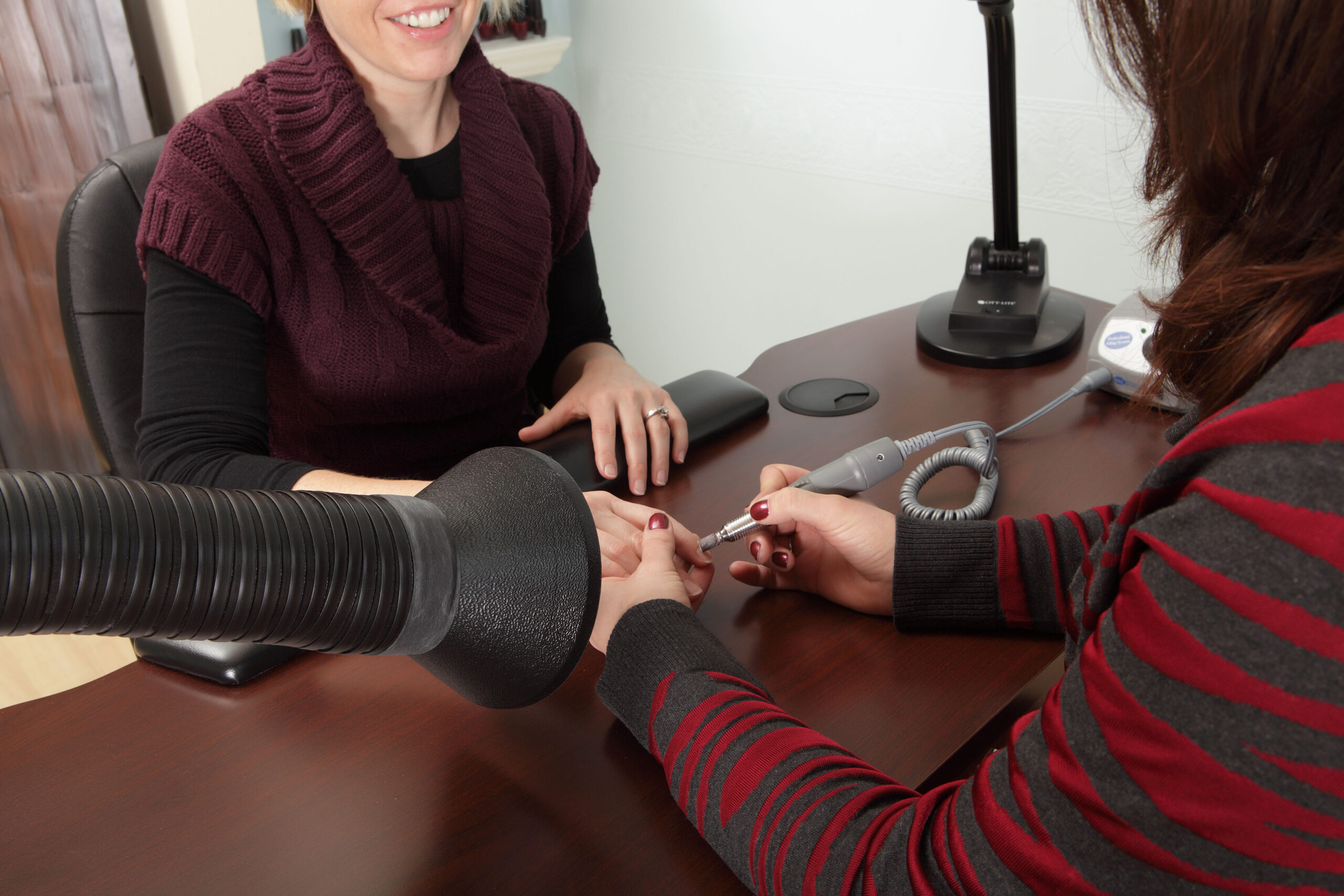
- Source capture at each station. This is the part most owners overlook. The IMC calls for each manicure and pedicure station to have a source capture system able to exhaust a minimum of 50 CFM. The idea is simple: remove vapors and dust where they’re generated, before they reach a technician’s breathing zone. iitm
Ambient air cleaners and room-level fans can help with comfort, but they are not a substitute for capturing contaminants at the table. This is why source-capture equipment sits at the center of most compliance plans.
Existing Salons Aren’t Automatically Off the Hook
Some jurisdictions have gone further than the model code and set deadlines for existing businesses:
- New York State: Salons opening on or after the mandate’s start date must have ventilation, and existing salons were given five years to comply. jezebel
- Boston: Nail salons must comply with the 2015 IMC ventilation requirements and submit a ventilation checklist stamped by a licensed mechanical engineer, along with a drawing of the system. boston
If you operate in a city with its own program, check for documentation requirements as well as equipment ones. Engineer-stamped paperwork is common, and it’s easier to arrange before the build-out than after.
A Practical Compliance Checklist
Before you sign a lease or start construction
- Ask the building department which mechanical code edition and local amendments apply.
- Confirm whether your project counts as new construction or an alteration that triggers the nail salon provisions.
- Ask whether plan submittal with mechanical drawings is required for your permit.
When selecting equipment
- Match the number of stations to the number of source capture points, including pedicure chairs.
- Verify the airflow rating at each capture point, not just the unit’s headline number.
- Plan the exhaust path, since some systems vent outdoors and others filter and return air. Your local code decides what is allowed.
After installation
- Keep spec sheets, balancing reports, and any engineer sign-offs in one folder for inspectors.
- Train technicians to position capture points close to the work. Distance matters.
- Schedule filter changes and duct cleaning so performance doesn’t drift.
Why It’s Worth Doing Well
Compliance is the floor, not the goal. Good source capture reduces the odor that clients notice the moment they walk in, cuts down on dust that settles on every surface, and gives your team a more comfortable workday. In a business where retention and staff turnover drive profit, that matters as much as passing inspection.
Next Steps
Start by finding out what your jurisdiction actually requires, then work backward to a station-by-station plan. For a deeper look at how the model code treats nail salon exhaust, the International Code Council’s CodeNotes on nail salon exhaust requirements is a good technical reference. For a policy-level overview of how states handle new and existing salons, see the Environmental Law Institute’s guide to indoor air quality in nail salons.
Salon Pure Air offers a range of source-capture solutions for manicure tables, pedicure stations, and everything in between. Contact us today, and our team will help you find options that fit your space and budget. Whether you’re opening your first studio or upgrading an existing one, we’ll help you build a system that keeps your technicians comfortable, your clients coming back, and your inspector satisfied.
This article is general information, not legal or engineering advice. Always confirm requirements with your local building department and a licensed mechanical professional.