

You’ve seen it happen, or maybe even felt it yourself. A hair stylist finishes a keratin smoothing treatment, and within minutes there’s a tickle in the throat, watery eyes, or a dry cough that lingers for the rest of the shift. In salon circles, it’s become so common it has an unofficial name: the Keratin Cough.
The instinctive response is to reach for a face mask. This seems like a reasonable precaution. But if your team is still coughing, tearing up, or leaving work with headaches, there’s a reason why masking isn’t enough. It comes down to basic chemistry.
The Dangers of Gaseous Formaldehyde Exposure in Salons
Many professional smoothing and keratin treatments contain formaldehyde or ingredients that release formaldehyde as heat is applied. When a flat iron passes over a freshly treated strand of hair, those chemical bonds break, releasing formaldehyde directly into your stylist’s breathing zone.
Formaldehyde at room temperature is a gas, not a particle. It doesn’t float around as a visible mist or collect on surfaces that you can wipe. It disperses invisibly through the air, traveling well beyond the immediate styling area and settling throughout the salon.
Formaldehyde exposure symptoms can range from mildly irritating to genuinely alarming. Short-term exposure commonly triggers burning or itching in the eyes, nose, and throat, persistent coughing, headaches, dizziness, and skin irritation. Repeated exposure raises more serious concerns, such as increased risk of respiratory disease and, according to the National Cancer Institute, a classified link to certain cancers.
Why Face Masks and Air Purifiers Don’t Ensure Keratin Treatment Safety
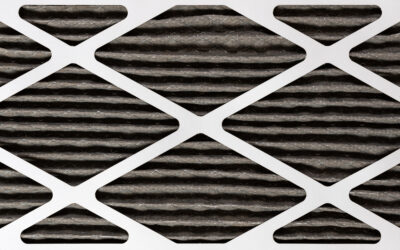
Standard disposable face masks, even surgical-grade ones, are designed to filter particles like dust, pollen, aerosols, and biological matter. They work by physically trapping solid or liquid matter in a fibrous barrier.
They are not built to filter gases. Formaldehyde passes straight through the filter material of a standard mask without being captured. Even N95 respirators, which offer superior particle filtration, are not effective against gaseous formaldehyde unless they are specifically equipped with activated carbon cartridges rated for organic vapors. These are specialty industrial respirators that you can’t find at a beauty supply store.
Air purifiers also fall short in this setting because they are designed to clean air that has already spread through the room. By the time an air purifier processes the air near a treatment station, the stylist working at that station has already inhaled a concentrated dose of formaldehyde vapor.
Why Source Capture Is the Gold Standard for Salon Respiratory Protection
Since general ventilation dilutes and spreads fumes and masks can’t filter gases, the only solution is to eliminate the fumes before they enter the room’s air supply. That’s the principle behind source capture ventilation.
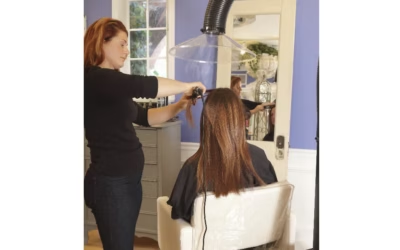
Source capture systems work by positioning an extraction point as close as possible to where the chemical fumes are generated. Rather than allowing formaldehyde gases to disperse, a source capture system pulls them out of the breathing zone immediately and routes them through a high-efficiency filtration system before they can circulate.
For keratin treatments, source capture systems are located at the styling chair to capture gases emitted throughout a keratin treatment and heat styling.
Unlike masks, a properly designed source capture system for a hair salon uses filtration media specifically matched to gaseous contaminants, including activated carbon stages capable of capturing volatile organic compounds (VOCs) like formaldehyde.
The difference in real-world performance is significant. Stylists working with source capture systems in place report fewer symptoms at the end of a shift. Headaches become less frequent. Coughing fades. Clients who are sensitive to chemical odors notice a cleaner, more comfortable environment. Over the long term, the cumulative chemical load on your team’s respiratory system is dramatically reduced.
Is Keratin Treatment Safe? Here’s How To Protect Your Salon
Source capture ventilation is the baseline protection that masks and room air purifiers were never designed to provide. If you have been relying on masks to mitigate formaldehyde exposure during smoothing treatments, you’re not doing enough. Your setup needs to stop the hazard at the source.
Regulatory interest in formaldehyde exposure in salons has increased over the past decade, with OSHA establishing permissible exposure limits and several states adding their own requirements. Beyond compliance, there’s also the practical reality that retaining experienced stylists is harder when they associate your salon with feeling unwell. Protecting your team’s long-term respiratory health is an investment in the people your business depends on.
Salon Pure Air offers a collection of source capture systems built specifically for the beauty industry. To help find the right unit for your salon, contact us today.